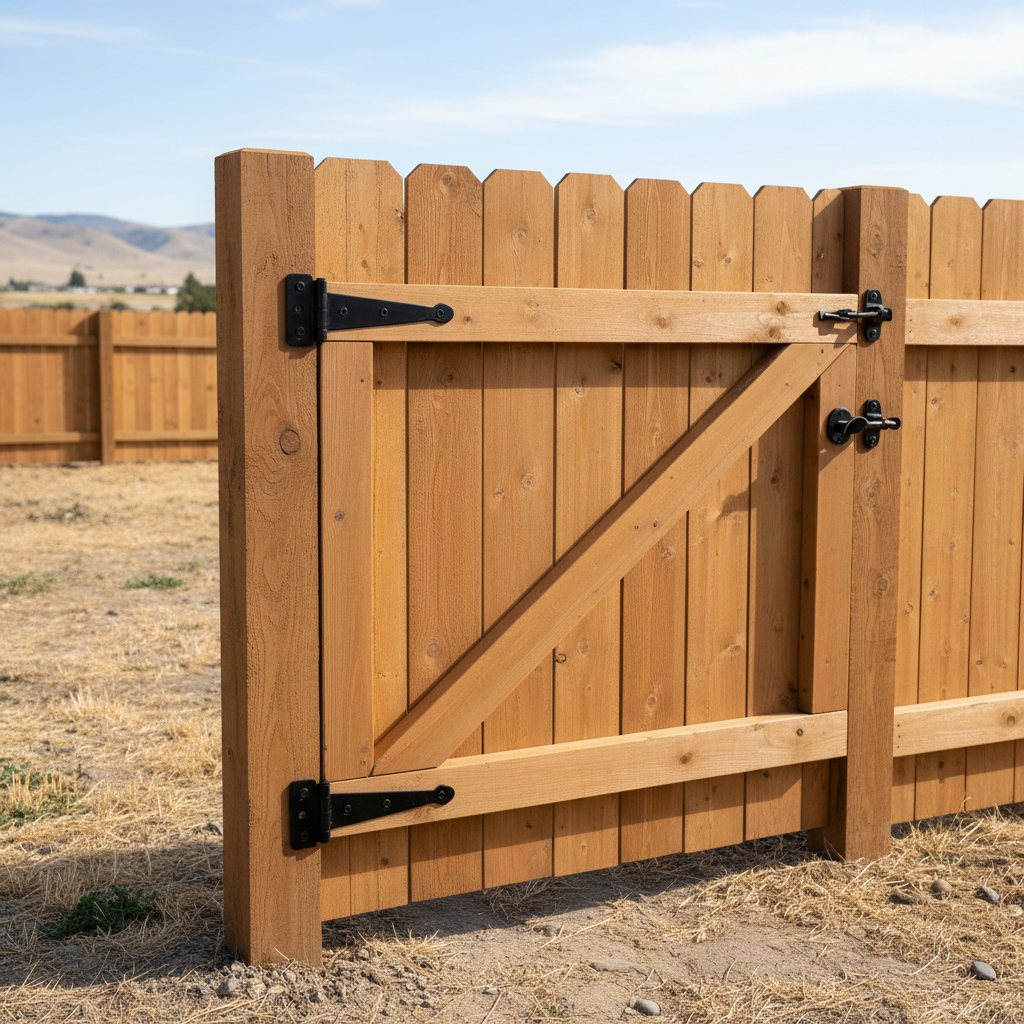
What kind of gates are best for Moses Lake weather?
That's a big one, because our weather here in Moses Lake can be pretty wild. We get those hot, dry summers, but then winter hits with freezing temps and sometimes a good amount of snow. Plus, we often deal with some serious wind coming off the lake. For gates, you really want something durable that won't warp, rust, or crack under pressure.
Steel and aluminum are usually top contenders. Steel is super strong, great for security, and can handle a beating. The key is making sure it's properly galvanized and powder-coated to prevent rust, especially with our occasional moisture and temperature swings. Aluminum is lighter, naturally rust-resistant, and still very strong. It's a good choice if you're looking for something that's low maintenance and won't put as much stress on your gate opener if you go automated.
Wood gates can look fantastic, but they need more upkeep here. The sun can really dry them out, leading to cracking and warping if they're not sealed and maintained regularly. If you do go with wood, make sure it's a good quality, rot-resistant species like cedar or redwood, and be prepared for annual staining or sealing. I've seen plenty of beautiful wood gates around the Knolls and Cascade Valley neighborhoods, but the ones that last are always well-cared for.
How do I choose between a swing gate and a slide gate?
This mostly comes down to space and how you want the gate to operate. A swing gate is probably what most people picture: it opens inward or outward like a regular door. You need enough clear space for the gate to swing fully open without hitting anything – cars, landscaping, or your house. If you have a long, straight driveway and plenty of room on either side, a swing gate can be a simple and elegant solution.
Slide gates, on the other hand, move parallel to your fence line. They're perfect if you have limited space in front of or behind the gate opening, or if your driveway slopes significantly. They don't need that big arc of clear space. They do need a long, clear run along the fence for the gate to slide into when open. If your property is tight or you've got a short driveway leading right up to a garage, a slide gate is often the better, more practical choice. They also tend to be more secure against forced entry because of their design.
Can I automate any gate, or do I need a special one?
You can automate most types of gates, but it's definitely easier and more reliable if the gate is designed with automation in mind from the start. A gate opener adds weight and puts stress on the gate structure and hinges. If your gate isn't built sturdy enough, it won't handle the motor's force over time. I've seen plenty of older, flimsier gates that just can't take the constant push and pull of an opener.
When we're building a gate for automation at Moses Lake Fencing, we make sure the frame is robust, the hinges are heavy-duty, and the posts are set deep and reinforced. For slide gates, we'll use a track and rollers that are meant for continuous use. If you're planning on automation, tell your installer upfront so they can build it right from day one. Trying to retrofit an opener onto a gate not built for it can lead to headaches and costly repairs down the road.
What's the deal with gate openers and power?
Most automatic gate openers need power, obviously. The most common setup is a 120V AC power line run from your house or another power source to the gate. This usually means digging a trench for electrical conduit, which adds to the installation cost and complexity. It's something to factor in if your gate is a long way from your main power supply.
However, solar-powered gate openers are a fantastic option, especially out here where we get so much sun. They're great for properties where running electrical lines is difficult or expensive. They use a solar panel to charge a battery, which then powers the opener. They've gotten a lot more reliable over the years. You'll want to make sure the solar panel is positioned to get good sun exposure throughout the day, and that the battery is sized correctly for your gate's weight and how often you'll be using it. They're a bit more expensive upfront, but they save on trenching costs and your electricity bill.
How much maintenance do automatic gates need?
Automatic gates definitely need more attention than a manual one, but it's usually pretty straightforward stuff. The biggest thing is keeping the moving parts clean and lubricated. For swing gates, that means hinges and the opener arm. For slide gates, you've got the track, rollers, and the chain or gear mechanism. Dust, dirt, and even spiderwebs can gum things up, especially with our dry, sometimes dusty conditions here in Moses Lake. A quick clean and a spray of silicone lubricant a couple of times a year usually does the trick.
You also want to check for any loose bolts or connections, and make sure the safety sensors are clear and working properly. Those photo-eye sensors can get blocked by leaves, dirt, or even snow in the winter, which will stop your gate from closing. If you hear any strange noises or the gate starts moving erratically, it's time to call a professional. Don't try to force it or mess with the motor yourself if you're not sure what you're doing.
Are there safety features I should know about for automatic gates?
Absolutely, safety is huge with automatic gates. They're powerful pieces of equipment, and you don't want anyone getting hurt. Modern gate openers come with several standard safety features. The most common are photo-electric safety sensors, or 'photo eyes.' These create an invisible beam across the gate opening. If anything breaks that beam while the gate is closing, it'll stop or reverse direction. This is critical for preventing the gate from closing on a car, person, or pet.
Another important feature is auto-reverse or obstruction sensing. If the gate encounters an obstacle while opening or closing, it should automatically reverse direction. Some systems also have pressure-sensitive edges that will stop the gate if they make contact with something. Always make sure these features are working correctly after installation and check them periodically. It's not just a good idea; it's often required by code to have these safety measures in place.
What kind of permits do I need for a gate installation in Moses Lake?
This is one of those questions that people sometimes forget to ask until it's too late. Yes, you'll likely need a permit for gate installation, especially if it's an automatic gate or if it's part of a new fence line. The City of Moses Lake has specific regulations regarding fence and gate heights, setbacks from property lines, and electrical work. For example, if you're installing an automatic gate, you'll need an electrical permit for the wiring, and that usually requires a licensed electrician.
The best thing to do is either check with the City of Moses Lake Planning Department yourself or, if you're working with a reputable contractor like Moses Lake Fencing, we'll handle the permit process for you. We know the local codes and what's required. Trying to skip the permits can lead to fines, delays, or even having to tear down and redo your work, which nobody wants.
``` faction: